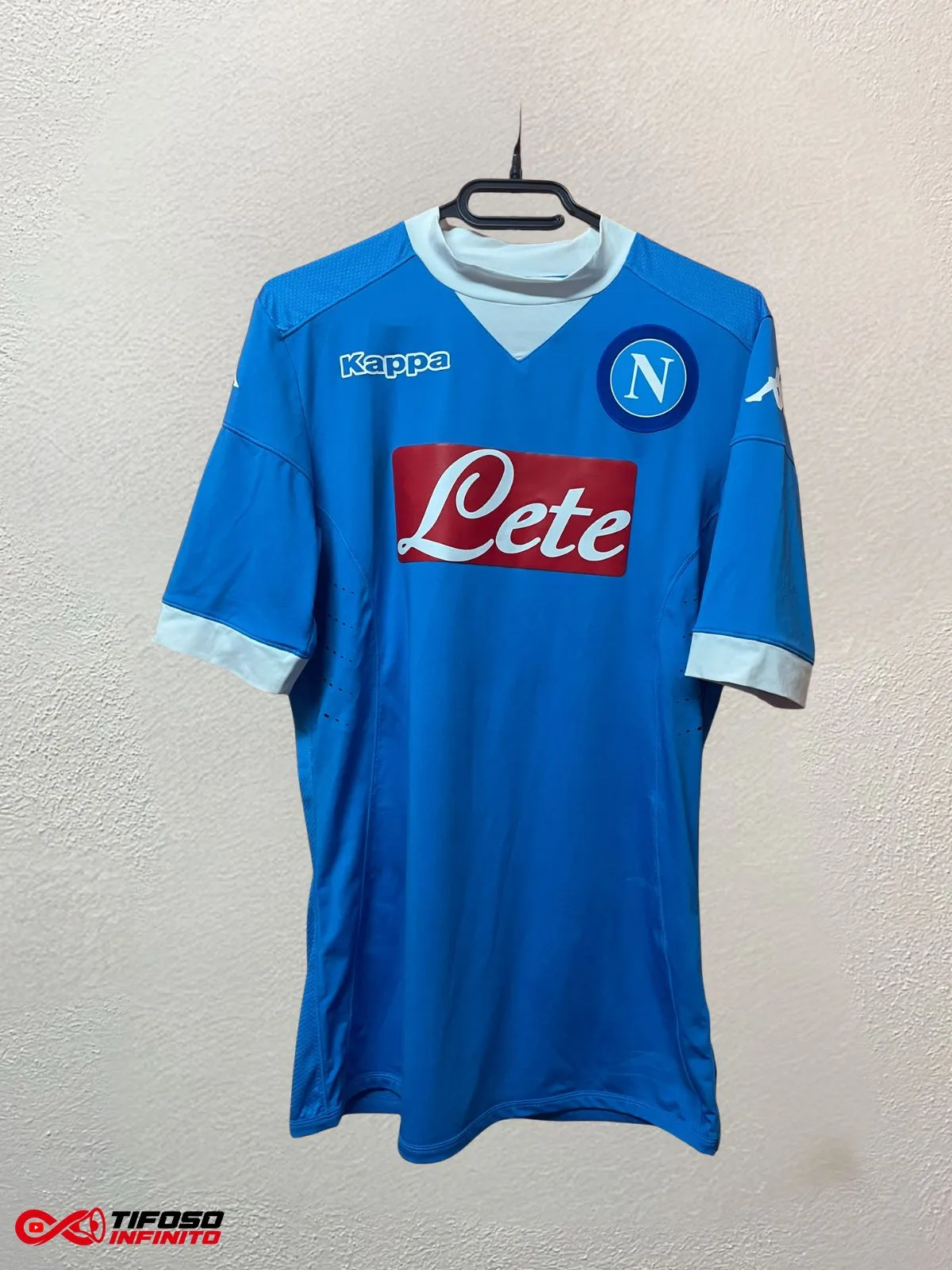
Among football shirt enthusiasts, three expressions are often used as if they were interchangeable, when in fact they describe three quite distinct categories, with very different implications for what you are actually buying: match worn, match issued and player issue (or player version). Understanding the difference isn't an academic exercise — it substantially changes what can reasonably be claimed about a piece, how it should be described in an honest product listing, and what documentation would be needed to support each claim. This guide doesn't certify any specific garment — it gives you the tools to read any description, including our own catalogue's, with a more informed eye.
Player issue: the starting point
Player issue — also called player version — is the version of a shirt made by the technical brand with the same cut, fabric and technical features as the one worn by players on the pitch, but with no guarantee that this specific example was ever assigned to or used by a footballer. It's essentially the same industrial product as a match shirt, distributed instead through ordinary retail channels or as promotional stock, without necessarily being tied to a specific match, player or event. Recognising a genuine player issue means checking that the cut and technical features really match the match-day version — usually shorter, closer-fitting, without the decorative finishing of the replica version — rather than simply trusting the seller's description.
Match issued: assigned, not necessarily worn
A shirt is described as match issued when it was assigned to a player or to a team's staff ahead of a specific match — that is, part of the batch of shirts prepared for that fixture — regardless of whether it was actually worn on the pitch. It's a distinction that surprises people new to this world: a player is usually given several identical shirts for the same match (for changes in case of dirt or damage, for the post-match exchange with opponents, or as a spare), and not all the shirts assigned end up being worn during the ninety minutes. A genuine match issued shirt is therefore tied to a specific context — team, match, possibly player — but that link always needs to be backed by documented provenance: the seller's word alone, however well-intentioned, is not proof in itself.
Match worn: the highest tier, and the hardest to prove
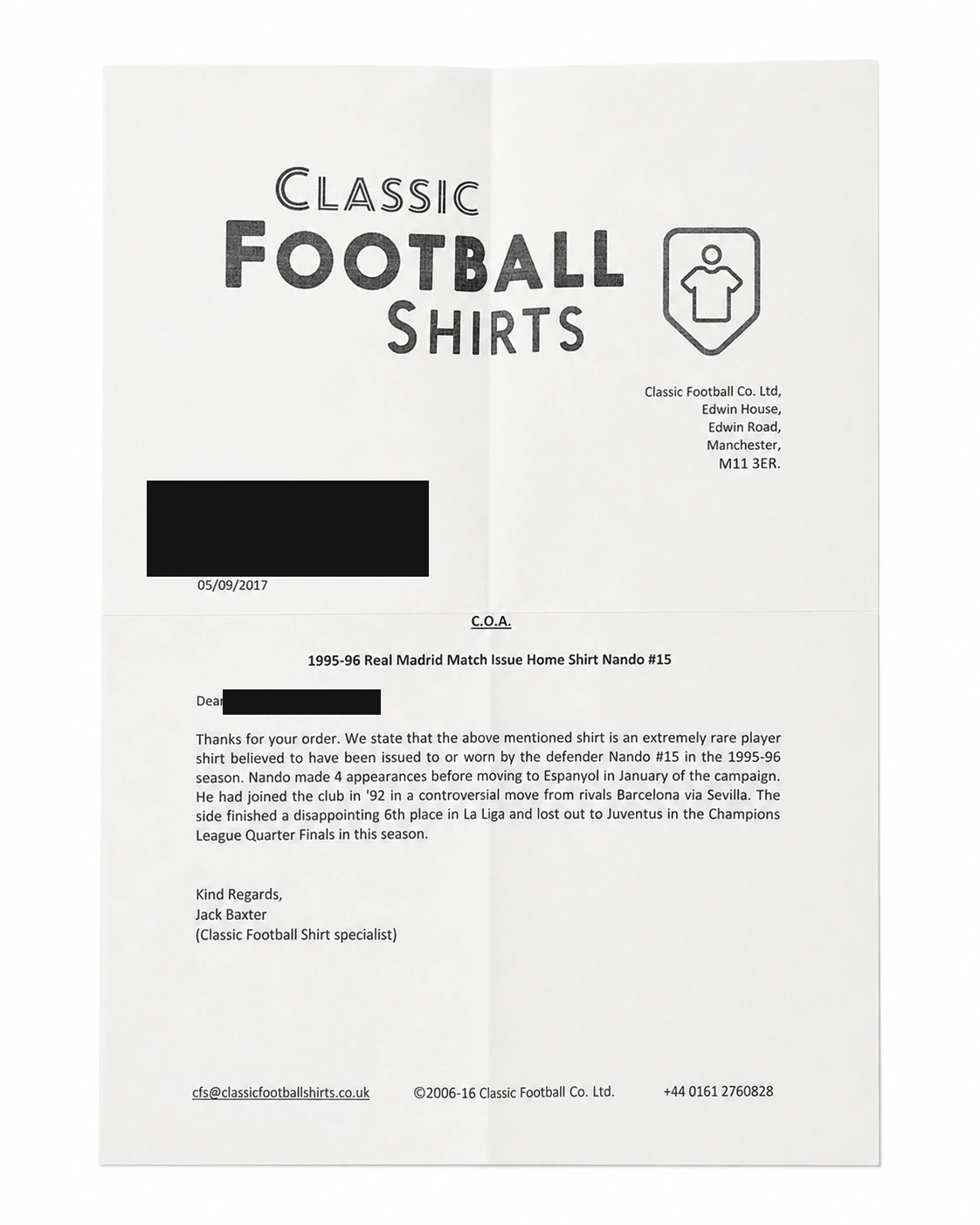
Match worn describes a shirt that was actually worn on the pitch during a specific match, by a specific player. It's the category that generates the most interest among collectors, precisely because it establishes a direct, verifiable link to a precise sporting moment — and for the same reason it's the one that requires the highest and hardest-to-obtain level of documentation. A serious match worn claim is almost always accompanied by a combination of elements: photos or footage from the event clearly showing identifying details of the garment (fabric imperfections, the position of patches, any numbering quirks), traceable provenance — a direct handover from the player, the club, or an auction house with an established reputation in the field — and, where available, a letter or certificate of authenticity (LOA) issued by a verification organisation recognised in the sports memorabilia industry.
Why the distinction genuinely matters
The difference between these three categories isn't just terminology: it directly affects the value, rarity and the story a piece can honestly tell. A player issue with no documented link to a match or a player remains a technically high-quality product, but its story ends there. A match issued shirt carries with it the context of a specific fixture, even if not necessarily the sweat of whoever wore it. An authenticated match worn shirt carries both. Using these terms interchangeably — perhaps to make a listing more appealing — isn't just imprecise: it risks attaching a value and a history to a garment that don't belong to it, at the expense of buyers' trust.
The documents that actually matter
When assessing a provenance claim, not all documents carry equal weight. A letter of authenticity (LOA) issued by a verification organisation with an established industry reputation carries different weight from a simple written statement by the seller themselves, however honestly meant. Photos and footage from the sporting event, where available, allow a direct comparison against specific details of the garment — a fabric flaw, the exact position of a patch — that are hard to replicate by chance on another example. A documented chain of ownership, tracing the piece from its original sporting context through to the current seller, adds a further layer of solidity. None of these elements is definitive on its own — but together they build an increasingly solid case.
The case of registration labels and tracking numbers
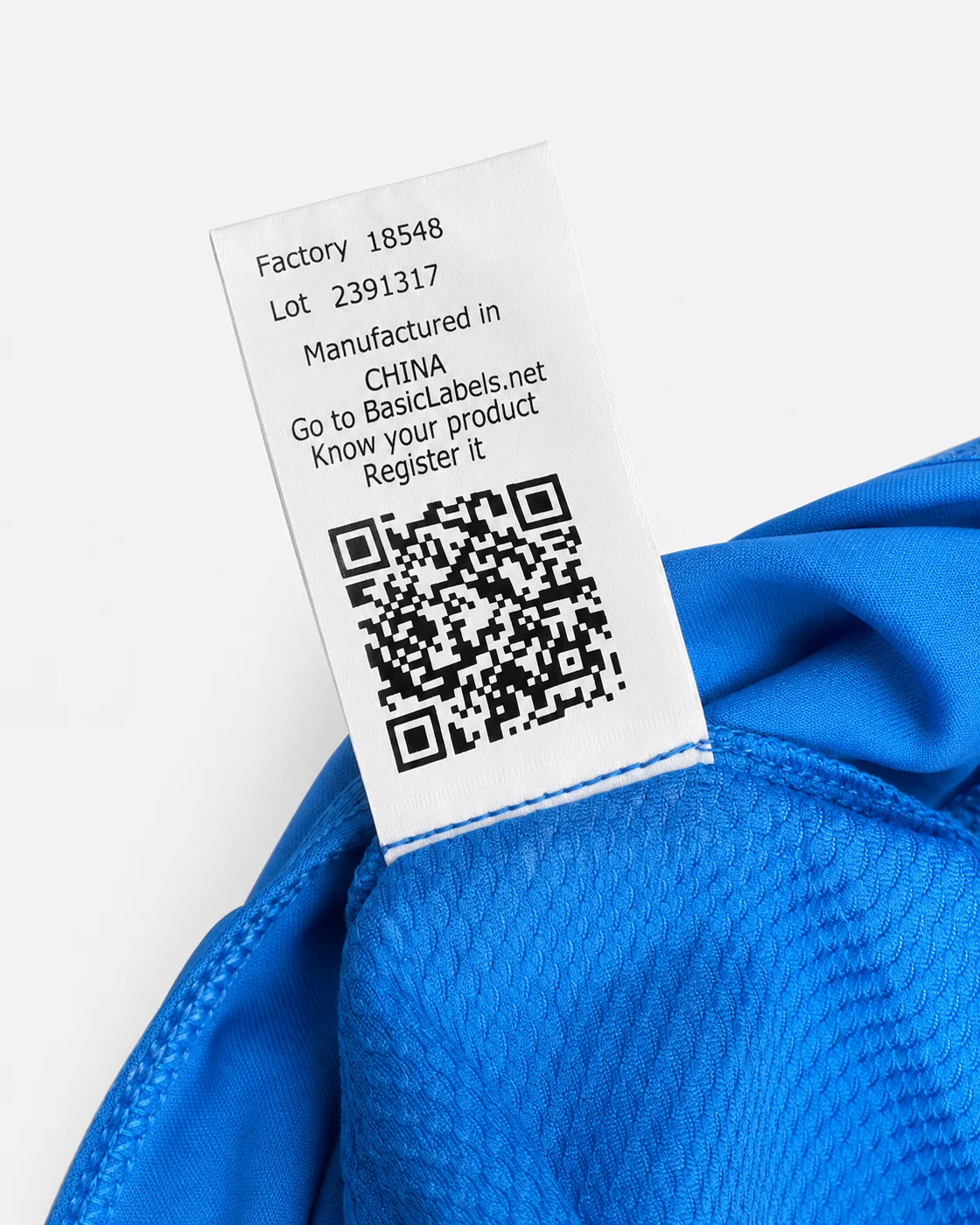
Some modern match shirts carry labels with QR codes or registration numbers specifically designed for traceability: a system that, when present and verifiable, adds a layer of objective confirmation beyond the seller's word. It should be said just as clearly, though, that the absence of such a system on an older shirt is not in itself evidence against authenticity: many eras and many brands never included any form of traceability of this kind, so it's entirely normal not to find it on less recent production.
Why a serious seller is always transparent about the category
A careful seller always draws a clear line between these three categories in every listing, and is just as transparent when the level of certainty is lower: a shirt "believed to be" match issued, or "likely" assigned to a given player based on circumstantial but not conclusive evidence, should be described exactly that way — with the qualifiers it deserves — rather than presented as an absolute certainty. This transparency isn't a limitation on the quality of an offering: on the contrary, it's what keeps a catalogue trustworthy over time, and what lets a buyer form a correct expectation of what they're actually taking home.
Player issue, match issued and match worn are not interchangeable synonyms: they are three different levels of documentation, and each deserves to be called by its own name.Tifoso Infinito editorial note
Knowing these distinctions doesn't just help you assess a purchase better: it also helps you read listings you come across online, in shops or at auction with a sharper critical eye, telling a documented claim apart from a merely plausible one. It's a vocabulary that, once learned, changes the way you look at every match shirt — including the pieces in our own catalogue, which we always present by specifying exactly what we can state, and what instead remains a hypothesis.